

Own the Pathway, Not Just the Team

Updated: Sep 5

Own the Pathway, Not Just the First Team
Women’s soccer is being repriced in real time. In the rest of the world, the transfer fees that flow back to the clubs that developed a player create sustainable ecosystems — and a financial reason to reinvest in low-cost development. For most of the history of the game in the United States, that piece has been missing. Understanding why is where this starts.
Let’s understand it systematically.
Start with what the market is now saying. In 2025, the transfer record in women’s soccer was broken, and then broken again. Lizbeth Ovalle’s reported move from Tigres to the Orlando Pride, in August, did not even last the year as the high-water mark. The record fell several times over twelve months — and the very top reported fee was disputed by the buying club, which tells you how fast, and how contested, this market has become.
According to FIFA’s Global Transfer Report, global spending on international transfers in the women’s game reached $28.6 million in 2025 — up about 84% year on year, and up from roughly $6.2 million in 2023. Reported fees for players like Naomi Girma and Olivia Smith cleared or approached seven figures and held for only months before the next deal surpassed them.
The trend is clear: a developed female player is an appreciating asset, and the appreciation is accelerating. Outside the United States, that fact funds the next generation. Inside it, very little of it has flowed back to the clubs that develop players. Understanding why is the rest of this piece.
First, credit where enormous credit is due
Before anything else: look at what the NWSL has built. Two top-flight women’s professional leagues came before it — the WUSA, built as a single entity, and the WPS, built on independently owned franchises — and each lasted only three seasons. The NWSL, launched in 2013, has become one of the most successful and widely respected professional women’s leagues in the world — deep, competitive, and commercially thriving. It is part of a global rise in the women’s game, alongside leagues like the Women’s Super League in England, Liga F in Spain, the Première Ligue in France, and the Frauen-Bundesliga in Germany.
It made sense to launch the NWSL as a single-entity league. Most of all, women’s pro soccer in the United States could not fail a third time. But the structure alone is not what set it apart — the WUSA had also been built as a single entity and still lasted only three seasons. What the NWSL had that its predecessors did not was support from outside the league: at launch, U.S. Soccer, the Canadian federation, and Mexico’s federation paid the salaries of their allocated national-team players, taking a major cost off the clubs through the fragile early years. That backing — more than any one ownership model — is a big part of why the league lasted long enough to grow into the force it is now. There is proof of how good the U.S. game can be sitting right on top of this pyramid: on the most recent USWNT roster, 21 of 26 players play their club football in the NWSL. The best U.S. players no longer have to leave to play in the best league available to them — they are already in it. That success is the foundation everything else is built on, and continuing to build the NWSL is, and should remain, the priority.
Now, as the NWSL looks to build a player development pathway beneath it — an even stronger foundation — we can look to global and domestic models as starting points. Not blueprints. We have a historic opportunity to build a system that prioritizes the whole player and isn’t constrained by the past.
Development, and where its value sits
Everywhere the game is mature, player development pays. When a player who came up through a club moves on, a share of the fee flows back to the clubs that trained her. Two FIFA mechanisms are meant to do this, and the details matter. The first, training compensation, does not currently apply to women’s football at all — FIFA has approved a framework for it but has not switched it on. The second, the solidarity mechanism, does apply to women’s international transfers, returning a small share of a fee to a player’s development clubs — but at today’s market size the amounts are still very small. So the global “development pays” engine barely turns for the women’s game yet.
Inside the United States, the picture turns on a distinction worth understanding: the difference between player rights and player contract rights. Player rights are about control — who holds a player’s registration and has the final say on a move. In a single-entity league like the NWSL, the league holds those, and no transfer happens without league approval. Player contract rights are about value — the economic interest a transfer fee actually pays for.
Where that value sits has been changing. Under the NWSL’s current rules, a club that transfers a player out of the league keeps the full transfer fee, where in the past the league retained much of it. The league still holds the contract itself and approves every move — but the value of a sale now sits closer to the club than it used to. It is a meaningful shift, and it is recent enough that its effects are still unfolding. Beneath the professional game, meanwhile, the grassroots still runs on families paying to play.
The league that pushed the game forward
Here the USL Super League deserves real credit. Launched in 2024, it has had a tremendous impact on the structure and economics of player development for women in this country. It was purpose-built around the model the rest of the world runs on: the FIFA international calendar, and club-owned player rights and contract rights, so that a club — not the league — holds both its players and the value it develops and sells. (The broader USL structure works this way on the men’s side too.)
Its real contribution was the push. By putting the international model on the table — the way clubs are built and rewarded across most of the world’s football — it helped move the U.S. women’s game toward that global framework. That is a meaningful contribution, and the USL Super League deserves credit for it.
Sustaining that model at scale, though, is its own challenge. As a young national first division, the USL Super League is still working toward a sustainable footing — it lost one of its founding clubs, Spokane Zephyr FC, in 2026. And that is structural, not just a headline. U.S. Soccer Federation standards require a first-division women’s league to field teams across at least two time zones from its first year, and across the Eastern, Central, and Pacific zones by its sixth. A national first division is therefore committed to coast-to-coast travel — one of the largest costs a club carries. An eight-team league stretched across the country is expensive by design. The model was sound; the challenge is scale.
A useful precedent from the men’s game
The men’s game offers one useful structural lesson here — not a model to copy wholesale, but a sequence worth studying.
In 2007, Major League Soccer began requiring its clubs to build youth academies, expanding the mandate over the following years. But the mandate alone did not make development pay. That came later: only once the rules let clubs keep the value they created — moving to full club retention on homegrown sales in 2018, and roughly 95% of any transfer fee by 2020 — did the incentive flip. Once clubs could keep what they developed, the homegrown pipeline that now defines U.S. men’s soccer followed, along with clubs like the Philadelphia Union, whose academy, built alongside its own school, turned homegrown players into more than $30 million of transfer revenue and ultimately into the club’s identity.
That gap — nine years between the mandate and the money — is the whole lesson. A mandate creates academies; an incentive makes them pay. You need both. And the international market shows the ceiling: FC Nordsjælland in Denmark built its men’s program around developing and selling academy talent — more than €150 million from its eight largest sales over five years — because the system rewards the clubs that develop.
One more number makes the cost of the missing piece concrete. FIFA reported in 2026 that, even in the men’s game where the global system does run, U.S. clubs captured just 11.5% of the training rewards generated by U.S.-developed players. The other 88.5% went to clubs abroad that did the developing. That is what a country leaves on the table when it develops players but isn’t built to capture their value.
Where the women’s game stands
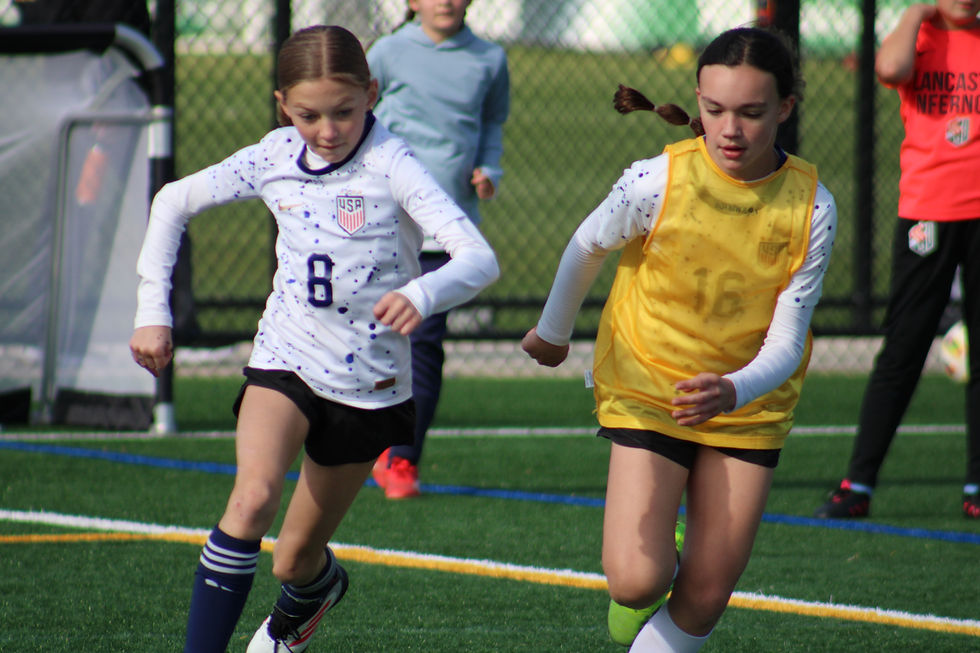
The NWSL is thriving and world-class. The USL Super League has shown that the international model belongs here, even as it works toward a sustainable footing. The part of the system that is still young — for the girls’ and women’s game — is everything beneath the top flight: the academies, the education alongside them, and the professional development layer where young players turn pro and the value they create is established. Everywhere the game matured, that layer is what made development pay.
It does not compete with the NWSL. It is built alongside it, and in service of it. And built well, it can widen the door — so that a family’s ability to pay no longer decides which girls get developed.
Own the pathway, not just the first team
Everyone wants to own the first team. The first team is the trophy, the logo, the stadium, the photograph. It is what money chases.
But the first team is only ever as good as the pathway beneath it. The durable asset is not the team — it is the pathway that produces players: the academy, the education alongside it, the club where young players turn professional, and the facilities that hold all of it. A first team is a result. The pathway is the thing that produces results, year after year, and holds its value regardless of any single season.
Own only the first team, and you are a buyer in a market that reprices talent upward every year — paying more and more for players other people developed. Own the pathway, and development pays for itself, compounds over time, and becomes part of the club’s identity. One of those positions gets more expensive every year. The other gets more valuable.
A chance to build it right
The talent is already here, in enormous supply. What is missing is the system built to identify young female players, keep them, develop them, and let the people who do that work share in what they create — without asking families to pay for the privilege. No one has built that at scale for the girls’ game. That is less a gap to be exploited than a chance to build something the sport has never had, and to build it right.
I spend my days building inside this system, which is why I can say the following with some confidence: the constraint on U.S. women’s soccer has never been talent, and it has never been the top of the pyramid — the NWSL and our USWNT have proven how good the U.S. game can be. The question that remains is underneath: who owns the pathway that develops the talent, and therefore who keeps what that talent becomes worth.
The transfer market is now telling us, in rising numbers every season, exactly what a developed player is worth. The real question the women’s game faces is who will own the pathway that develops her — and whether it gets built in a way that widens the door instead of narrowing it.
Own the pathway, not just the first team.
— Jami Dansingburg, Founder, Love City Football Group
Sources
• FIFA Global Transfer Report (women’s football), 2025 — international transfer spend and year-on-year growth.
• NWSL Competition Manual (2025) and Collective Bargaining Agreement (2024–2030) — transfer-fee retention and the league-held Standard Player Agreement.
• FIFA, Regulations on the Status and Transfer of Players — training compensation (Article 20; not currently applied to women’s football) and the solidarity mechanism (Article 21).
• FIFA (2026) — U.S. clubs’ share of the training rewards generated by U.S.-developed players.
• U.S. Women’s and Men’s National Team rosters (club of record).
Jami Dansingburg is Founder of Love City Football Group and CEO of Love City FC (WPSL). She writes here in a personal capacity. Where an essay touches a club, league, or transaction in which she has an interest, that interest is disclosed in the text.
Comments